• Lilly partners with NVIDIA to build what it calls the most powerful AI supercomputer operated by a pharmaceutical company, powered by Blackwell-class GPU architecture
• Platform to train large-scale discovery models on millions of experimental datapoints—aiming to cut cycle times and increase candidate quality
• Collaboration signals pharma’s shift toward fully AI-native R&D pipelines, moving from digital assistance to computationally driven molecule creation
A Landmark Partnership Recalibrating Pharma’s Computational Ambition
Eli Lilly’s October 2025 announcement marks one of the most ambitious AI infrastructure investments the industry has seen. By collaborating with NVIDIA, Lilly aims to construct an AI supercomputer specifically tuned for pharmaceutical R&D workloads—potentially redefining what early-stage discovery pipelines can achieve. The initiative reflects the growing belief among top-tier pharma companies that next-generation computation is now a prerequisite for accessing new chemical and biological design frontiers.
Built on NVIDIA Blackwell GPUs for Drug Discovery at Unprecedented Scale
At the core of this collaboration is NVIDIA’s Blackwell GPU platform, engineered for extreme-scale neural network training and high-throughput scientific workloads. Lilly plans to train large, multi-modal discovery models across millions of experimental datapoints, spanning chemistry, structural biology, and phenotypic response data. By integrating high-resolution lab outputs directly into generative and predictive architectures, the system is designed to create a continuous feedback loop between wet-lab evidence and AI-driven molecular ideation.
Accelerating Molecule Design, Optimization and Predictive Validation
With this supercomputing backbone, Lilly aims to accelerate hit identification, optimize molecular liabilities earlier, and push predictive accuracy closer to experimental fidelity. The goal: compress discovery timelines, improve success rates at preclinical checkpoints, and lower the cost of exploring vast chemical space. The platform is expected to sharpen Lilly’s ability to probe challenging therapeutic targets and explore molecular configurations that would be experimentally expensive or infeasible to test at scale.
A Defining Step Toward Fully AI-Native Pharma R&D
Lilly’s partnership with NVIDIA positions the company at the forefront of AI-first drug creation. This move signals a broader industry transition—from traditional, experiment-heavy discovery pipelines to computationally led, lab-integrated R&D ecosystems. By embedding foundational AI models directly into discovery workflows, Lilly is preparing for a future in which supercomputing, generative design, and autonomous experimentation converge. As other pharma companies evaluate similar infrastructure strategies, this collaboration may serve as the benchmark for AI-powered R&D in the decade ahead.
Will Lilly’s AI Supercomputer with NVIDIA Become the Breakthrough That Redefines Competitive Timelines in Drug Development?
 By Anuja Singh
Releated Posts
Can Novo Nordisk’s AI Partnership with AWS Transform the Drug Discovery Timeline?
Copenhagen/London, August 2026 — Novo Nordisk and Amazon Web Services (AWS) have entered into a strategic partnership aimed…
 By
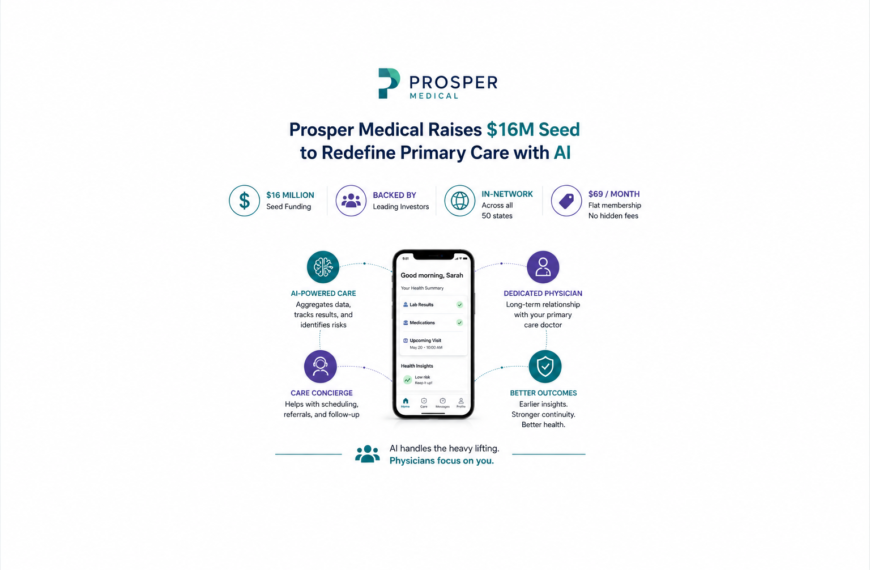
ByProsper Medical’s $16M Raise Is a Bet That AI Can Make Concierge Medicine Affordable — Not Just Convenient
Analysis of Prosper Medical’s seed round, its AI-powered care model, and what it signals about the next phase…
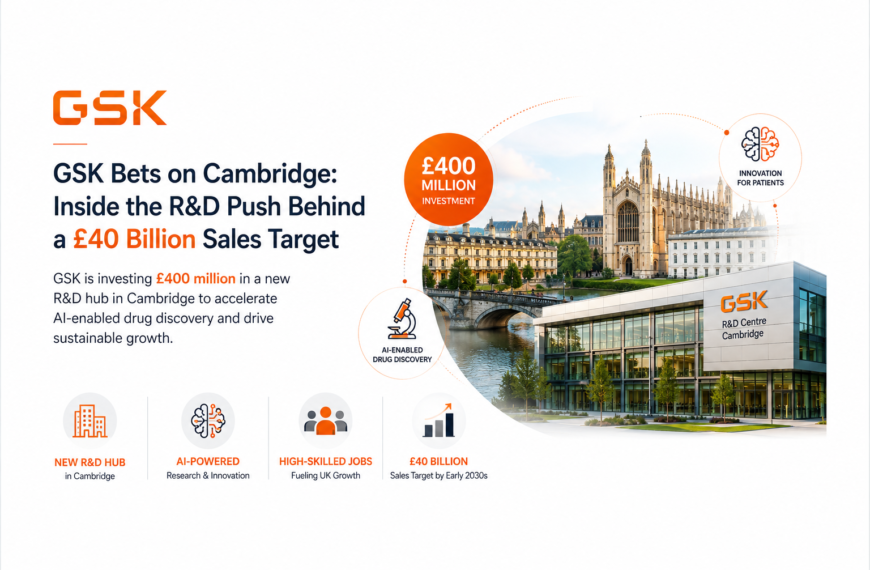
GSK Bets on Cambridge: Inside the R&D Push Behind a £40 Billion Sales Target
A look at GSK’s new Cambridge research centre, its cost-cutting programme, and what a 75% profit drop tells…

Can Insilico Medicine’s 9-Month AI Drug Discovery Record in China Rewrite the Global Timeline for Bringing New Medicines to Patients?
Key Highlights A Landmark Shift in How Fast New Medicines Can Reach Patients Insilico Medicine’s disclosure that it…

Gallery