23 January 2026
Executive Summary
Nvidia CEO Jensen Huang has underscored the transformative potential of artificial intelligence in drug research, stating at the World Economic Forum that AI platforms could fundamentally reshape—and in some cases replace—traditional laboratory-based discovery models. Pointing to collaborations such as the Nvidia–Eli Lilly supercomputer initiative, Huang’s remarks highlight how advanced AI architectures are rapidly evolving from supportive tools into the operational backbone of pharmaceutical R&D.
From Acceleration Tool to Discovery Engine
Historically, AI has been positioned as an efficiency enhancer in drug discovery—speeding up target identification, molecular design, and data analysis. Huang’s comments suggest a more radical trajectory: AI-native research environments capable of simulating, predicting, and iterating biological experiments at scale.
According to Huang, AI platforms can:
- Model complex biological systems with unprecedented depth
- Reduce dependence on early-stage wet-lab experimentation
- Enable faster hypothesis testing and decision-making
This signals a shift from AI-assisted research to AI-led discovery workflows.
The Nvidia–Eli Lilly Collaboration: A Blueprint for AI-Native R&D
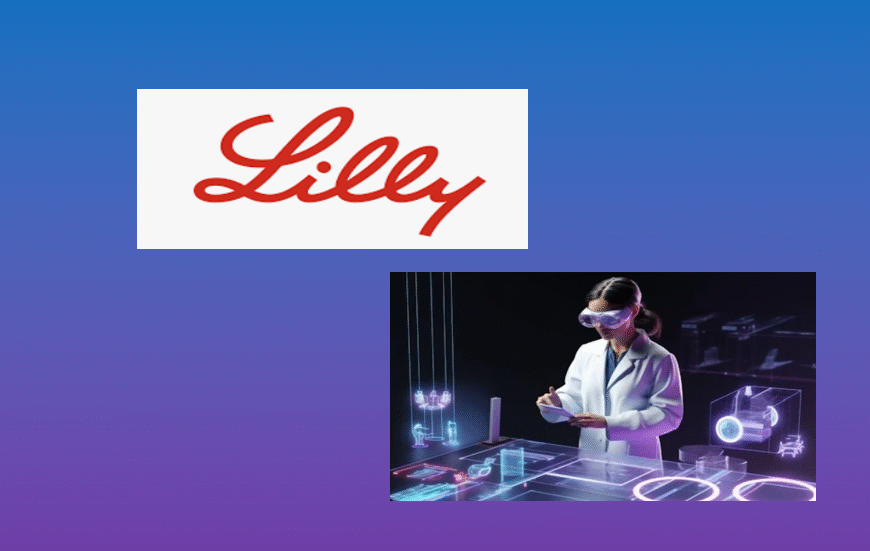
Huang highlighted Nvidia’s partnership with Eli Lilly, centered on high-performance AI supercomputing infrastructure designed to power next-generation drug discovery. The collaboration exemplifies how:
- Advanced GPUs and AI architectures are becoming foundational research assets
- Pharma companies are investing directly in AI compute as strategic infrastructure
- Discovery timelines may be compressed through large-scale simulation and modeling
Such initiatives suggest that compute capability could soon rival laboratory capacity as a core competitive advantage.
Implications for Pharma R&D Models
If AI platforms increasingly replace or augment traditional labs, the implications are profound:
- R&D cost structures may shift from physical infrastructure to compute-intensive models
- Talent strategies could prioritize computational biology and AI engineering
- Smaller biotechs may gain access to discovery capabilities once reserved for large pharma
AI’s integration at this depth could redefine how—and where—drug discovery happens.
A Broader Industry Signal: AI as R&D Infrastructure
Huang’s remarks reflect a growing consensus across technology and life sciences: AI is no longer peripheral to drug research. Instead, it is emerging as a foundational layer, shaping experimentation, decision-making, and innovation velocity.
As pharma companies reassess capital allocation, investment in AI platforms and partnerships with technology leaders may become as strategic as pipeline acquisitions.
Outlook: The Rise of the AI-First Pharma Model
While traditional laboratories will remain essential, Huang’s vision points toward a hybrid future where AI-driven simulation and experimentation dominate early discovery, reserving physical labs for validation and late-stage development.
The defining question ahead:
Which pharmaceutical companies will successfully transition from lab-centric to AI-first R&D—and who will be left behind?

 By
By