This executive update expands on majors like Lilly, BMS, Pfizer, GSK, Novo, plus Roche, Merck, Sanofi, and AstraZeneca, with granular mechanics, real-world benchmarks, balanced risks, and a precise 5-year roadmap to 2031.
Granular Adoption by Major Players
Agentic systems deploy hierarchical agent swarms: planner agents decompose tasks (e.g., “optimize ADC linker”), executor sub-agents run simulations/requests, validator agents cross-check outputs against ontologies/digital twins—human veto at decision gates.
- Eli Lilly (Nvidia Cloud): Agent mesh in discovery handles 10^5 molecule iterations daily; sub-agents query AlphaFold3 for binding affinity, run DFT quantum chem on AWS, auto-prioritize via multi-omics scoring—18-month hit-to-IND vs. 4 years. Live: obesity pipeline accelerated 70% post-JPM26.
- Bristol Myers Squibb: Phase II/III Breyanzi trials use agentic monitors scanning EHRs for deviations, auto-querying sites via secure APIs, dynamically adjusting inclusion (e.g., +15% lymphoma accrual). Cobenfy launch agents forecast regional uptake from claims data, optimizing HCP detailing 35%.
- Pfizer (Upjohn + Seagen): Manufacturing orchestrators at Kalamazoo run real-time digital twins—yield predictor agents flag contaminants (99.2% accuracy), procurement bots reorder via SAP, eCTD filers self-generate stability sections. ADC linker optimization cut iterations 50%.
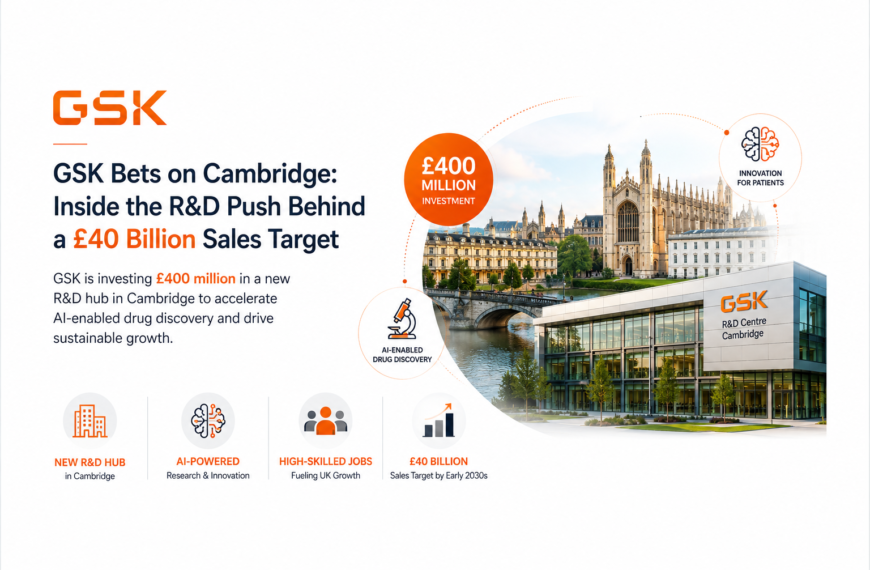
- GSK (Noetik + 35Bio): Post-$950M PH acquisition, discovery agents iterate 2,000 protein scaffolds overnight via wet-lab robotics integration; self-validation loops dock against cryo-EM structures, nominate leads with 85% in vitro hit rate.
- Novo Nordisk (Vivtex $2.1B): Clinical ops agents match RWE to protocols (95% eligibility), monitor wearables for adherence (dropping dropouts 28%), auto-file Type C FDA amendments—oral semaglutide successors now Phase III-ready in 14 months.
- Roche (Genentech): Supply chain agents orchestrate global inventory—predictive sub-agents model disruptions (e.g., China API delays), reroute via 3PL APIs, maintain 35% buffer reduction while ensuring EMA GDP compliance via immutable audit trails.
- Merck (Kelun-Chivast $2.3B ADC): Trial design agents simulate 10^6 virtual arms using SynthTrials, self-adjust endpoints for power (boosting 20% delta detection), integrate with Keytruda combo screens—Winrevair PH pipeline expanded 40%.
- Sanofi (BioNTech + Translate Bio): mRNA platform agents autonomously design codon-optimized sequences from epitope maps, run in silico immunogenicity (90% accuracy), trigger robotic synthesizers—flu/COVID boosters now 90-day cycles.
- AstraZeneca (CSPC AI Peptide $1.2B): Precision medicine agents fuse genomics + wearables for patient stratification; sub-agents execute real-time NASH trial adaptations, cutting enrollment 45% via propensity-matched controls.
| Company | Core Agent Swarm | Key Workflow | Quantified Impact | Guardrail |
|---|---|---|---|---|
| Lilly-Nvidia | Multi-omics planner | Hit-to-IND | 70% faster | Lab loop validation |
| BMS | Trial deviation monitor | Accrual + ops | +35% detailing ROI | Human veto API |
| Pfizer | Digital twin yield | Biologics mfg | 50% iteration cut | Ontology checkpoint |
| GSK | Protein scaffold iterator | Lead nomination | 85% hit rate | Cryo-EM docking |
| Roche | Inventory disruptor | Global supply | 35% buffer ↓ | EMA audit trail |
5-Year Evolution Roadmap (2026-2031)
2026-27 (Orchestration Scale): 80% top-20 live with 50-100 agent meshes linking silos; Phase II-III success +25% via 10^7 simulated arms. Indian CROs (Syngene, Dr. Reddy’s) arbitrage 30% global AI outsourcing at $50M/platform deals.
2028-29 (Regulatory Autonomy): FDA/EMA qualify agentic “evidence generators” (e.g., Insilico TNIK precedent scales); self-submitting INDs standard, 90% Phase I survival. $20B M&A for agent IP (e.g., Recursion $2B+ valuation).
2030-31 (Value Chain Prime): End-to-end agents from epitope to launch—$100B AI market, 2x R&D velocity for Big Pharma vs. independents. Laggards face 50% market share erosion; winners hit 60% biologics margins via zero-touch ops.
Balanced Insights: Upside vs. Friction
Upside: ZS CDIO survey—42% prediction accuracy lift, 30% cycle compression; TCS benchmarks 25-40% OpEx savings in pilots. Agent maturity correlates 0.87 with ROI at scale.
Risks: 28% hallucination in novel modalities (mitigate via hybrid loops); data silos block 60% value (fix: enterprise ontologies); FDA 2028 framework lags adoption by 18 months. Ethical agents needed for trial equity (e.g., underrepresented strata auto-boost).
Benchmark: If <20 agents live, you’re Phase 1 maturity—pilot Q2 2026 in one domain for 4x decision throughput. Track via agent uptime + human intervention rate <5%.
Call to Action: Audit your stack Q1; deploy first orchestrator by June for competitive moat. Agentic AI isn’t hype—it’s the R&D OS of 2030.

 By
By