January 2026
Executive Summary
GSK has agreed to acquire Rapt Therapeutics, a U.S.-based biotech focused on inflammatory and immunologic diseases, in a deal valuing the company at $2.2 billion. The acquisition gives GSK access to ozureprubart, a late-stage, long-acting food allergy therapy with potential blockbuster ambitions. The transaction underscores how large pharmaceutical companies are accelerating targeted M&A strategies to reinforce pipelines as major products approach patent expiry.
Strategic Rationale: Targeted M&A Over Mega-Mergers
The acquisition marks the first major deal under new CEO Luke Miels and reflects a disciplined “bolt-on” approach rather than large-scale consolidation. By acquiring Rapt, GSK strengthens its position in:
- Inflammation and immunology
- Long-acting biologics
- Disease areas with significant unmet need, such as food allergies
Ozureprubart, currently in Phase II development, is designed for less frequent dosing than existing therapies—an attribute that could drive long-term patient adherence and commercial differentiation.
Pipeline Reinforcement Amid Patent Expirations
GSK, like its global peers, faces mounting pressure from an impending patent cliff, particularly in its HIV portfolio later this decade. The Rapt acquisition reflects a broader industry imperative: replace future at-risk revenues with late-stage, high-probability assets.
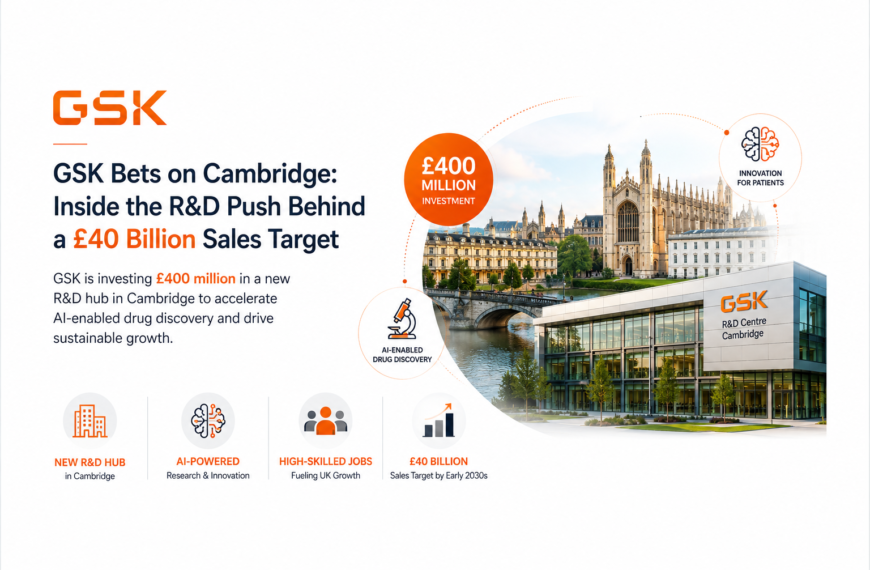
GSK has indicated a tentative 2031 launch timeline for ozureprubart, aligning with its ambition to reach £40 billion in annual revenues by the same year.
Portfolio Fit and Commercial Synergies
The deal complements GSK’s existing respiratory and immunology franchises, enabling potential synergies across:
- Clinical development expertise
- Commercial infrastructure
- Long-term lifecycle management
Importantly, GSK gains global rights to ozureprubart, with certain regional exclusions in Greater China, allowing focused deployment across its core markets.
Investor and Market Context
The acquisition comes at a time when investors are closely scrutinizing large pharma’s ability to deliver organic growth post-patent expiry. While GSK’s share price has rallied strongly over the past year, the company continues to face comparisons with faster-growing peers.
Beyond Rapt, GSK has recently advanced:
- Multiple newly approved or late-stage assets in asthma and infectious disease
- Strategic licensing and development partnerships
- Structural changes to its HIV business, including the exit of Pfizer from ViiV Healthcare
Broader Industry Signal: The Patent Cliff Drives Precision Dealmaking
The Rapt transaction reinforces a wider trend across Big Pharma: precision acquisitions targeting differentiated late-stage assets, rather than early discovery risk or transformational mergers.
As exclusivity losses loom across the sector, competition for high-quality biotech assets is intensifying.
Outlook: Execution Will Define the Payoff
While ozureprubart remains in mid-stage development, its success could position GSK as a meaningful player in food allergy treatment—a market with growing prevalence and limited therapeutic options.
The strategic question ahead:
Can disciplined, science-led acquisitions like Rapt deliver the growth GSK needs to stay competitive in the post-patent era?

 By
By