San Francisco | January 12, 2026
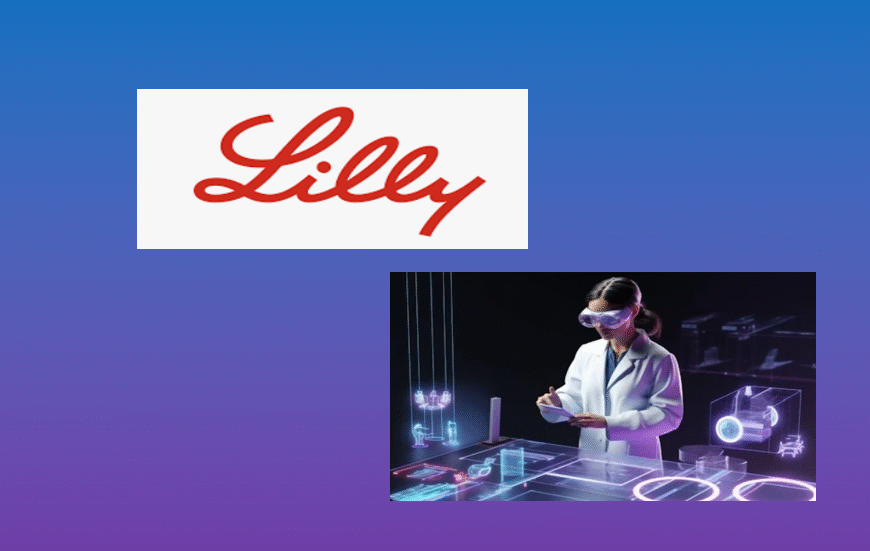
The 44th Annual J.P. Morgan Healthcare Conference (JPM26) opened with a defining signal for the global life sciences industry: artificial intelligence has moved from experimentation to industrial-scale execution. Headlining Day One was a $1 billion, five-year strategic alliance between Eli Lilly and Company and NVIDIA, positioning AI as the central engine of next-generation drug discovery.
The announcement set the tone for what industry leaders are calling the “Dealmaking Super Bowl” of 2026, as pharmaceutical and biotechnology companies confront a looming patent cliff that threatens an estimated $170 billion in at-risk revenues over the coming years.
A $1 Billion Bet on Closed-Loop Drug Discovery
At the center of the partnership is the creation of an AI Co-Innovation Lab in the San Francisco Bay Area, scheduled to open in March 2026. The facility will integrate NVIDIA’s next-generation AI computing architecture and BioNeMo platform directly with Lilly’s automated wet-lab infrastructure, creating a continuous, closed-loop discovery system.
In this model, AI algorithms generate molecular hypotheses that are immediately validated through robotic experimentation, with results fed back into the system in real time. The objective is clear: collapse the traditional drug discovery cycle, reduce attrition, and directly challenge “Eroom’s Law,” which has long plagued pharmaceutical R&D with rising costs and declining productivity.
Market reaction was swift, reflecting investor confidence that AI-driven automation could deliver tangible efficiency gains at scale.
JPM26 Confirms a Shift from AI Pilots to Platform Economics
While AI partnerships have become increasingly common, the scale and structure of the Lilly–NVIDIA alliance marks a clear departure from prior pilot-driven collaborations. By co-locating computational scientists and biologists and embedding AI directly into laboratory execution, the partnership represents a move toward industrialized drug discovery.
The deal underscores a broader inflection point for the sector: high-performance computing and biological data have reached critical mass, enabling AI systems to move beyond prediction and into autonomous experimentation.
M&A Momentum Accelerates as Patent Pressures Mount
Beyond AI alliances, JPM26 Day One also highlighted accelerating late-stage asset acquisition activity. AbbVie announced a multi-billion-dollar transaction involving RemeGen, targeting a bispecific antibody for lung and colorectal cancers—reinforcing Big Pharma’s priority for de-risked, revenue-ready assets.
With exclusivity losses approaching for several blockbuster therapies across the industry, 2026 is shaping up as a year where capital discipline gives way to strategic urgency.
Winners, Laggards, and the New AI-Biotech Hierarchy
Early signals from JPM26 suggest a reshaping of competitive advantage:
- Eli Lilly emerges as a frontrunner in AI-integrated pharma, reinforcing its leadership in both GLP-1 therapies and oncology.
- NVIDIA continues its evolution from hardware supplier to foundational platform provider for life sciences, positioning itself as critical infrastructure for biological innovation.
- AI-native biotech firms with tightly integrated computational and experimental capabilities are re-emerging as prime acquisition targets.
Conversely, pharmaceutical companies that have been slower to embed deep learning into R&D face mounting pressure. With major assets nearing loss of exclusivity, execution risk in deal-making has never been higher.
Biology’s “Transformer Moment”
Industry executives at JPM26 are increasingly referring to 2026 as biology’s “transformer moment”—a parallel to the neural network architectures that reshaped the technology sector. The convergence of scalable compute, generative AI, robotics, and regulatory openness is driving a shift from data scarcity to data abundance in drug development.
Regulators are also adapting. Signals from the FDA indicate growing openness to AI-enabled trial design, digital twins, and data-driven development strategies, potentially shortening timelines to approval.
What to Watch for the Rest of 2026
As JPM26 unfolds, expectations are building for:
- A wave of copycat AI alliances announced by major pharmaceutical players
- Increased M&A activity in immunology, oncology, and rare diseases
- Greater emphasis on “Physical AI”—automation and robotics that bridge digital discovery and physical experimentation
Ultimately, the success of these initiatives will be measured not by announcements, but by clinical outcomes and pipeline productivity.
Strategic Outlook
JPM26 has made one reality unmistakable: the era of speculative AI in biopharma is over. The industry is now entering a phase of applied, revenue-linked biological intelligence, where winners will be defined by execution, integration, and speed.
The decisions made this week in San Francisco are likely to shape the competitive landscape of global healthcare for the next decade.
BioNext Market Insights – Editorial Note:
The Lilly–NVIDIA partnership is not just a deal—it is a structural signal that AI has become core infrastructure for modern drug development, redefining how innovation, capital, and competitive advantage converge in biopharma.

 By
By