Merck concluded 2025 with a strong performance across its pharmaceuticals, vaccines, and oncology segments, demonstrating resilience, strategic focus, and ongoing innovation. Amid global market pressures, evolving regulatory requirements, and competitive intensity, the company advanced key pipeline programs, strengthened its portfolio, and executed selective deals to accelerate growth.
Strategic Reflection: Balancing Portfolio Strength with Innovation
Merck’s 2025 strategy focused on high-impact therapeutic areas including oncology, vaccines, immunology, and rare diseases, while selectively pursuing partnerships and acquisitions to enhance pipeline depth and platform capabilities. Precision medicine, next-generation biologics, and innovative vaccines remained central to growth, alongside operational efficiency and disciplined resource allocation.
Key Brands and Pipeline Performance
Merck’s flagship products continued to drive performance in 2025:
- Keytruda (oncology): Expanded indications across multiple cancers, including lung, melanoma, and head & neck cancers, maintained global leadership in immuno-oncology.
- Lynparza (oncology): Strong uptake in ovarian, breast, and prostate cancer, with ongoing studies in combination therapies advancing the pipeline.
- Gardasil and Shingrix (vaccines): Broad adoption in global immunization programs reinforced Merck’s leadership in preventive healthcare.
- Jemperli (rare diseases/immunology): Demonstrated growth in endometrial cancer, supporting expansion into new markets.
Merck’s pipeline remains robust, with late-stage programs in oncology (e.g., novel PD-1/PD-L1 combos, bispecific antibodies), cardiovascular/metabolic diseases, and gene therapies, reflecting a balanced approach between near-term revenue drivers and long-term innovation.
Strategic Deals and Collaborations
In 2025, Merck strengthened its innovation engine through several high-impact deals:
- Acquisition of VelosBio: Enhanced Merck’s oncology pipeline with Tivdak, a targeted therapy for solid tumors, complementing Keytruda and Lynparza portfolios.
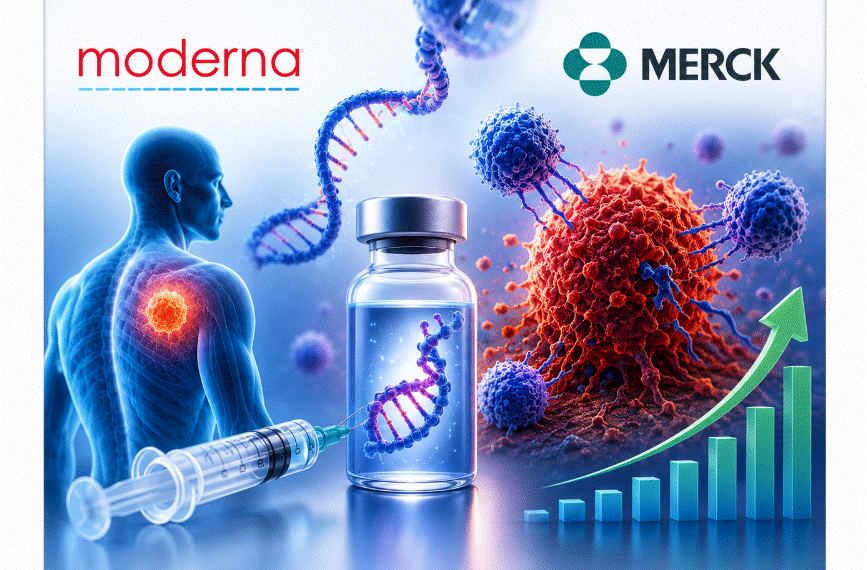
- Collaboration with Moderna: Focused on mRNA-based combination vaccines, reinforcing Merck’s position in next-generation vaccine platforms.
- Partnership with Icosavax: Advanced respiratory and pandemic preparedness vaccines, leveraging novel VLP technology.
- License agreement with Seagen: Expanded access to antibody-drug conjugate (ADC) technologies, accelerating development of next-generation oncology therapies.
These strategic transactions highlight Merck’s precision-focused deal-making to complement internal R&D, expand therapeutic breadth, and accelerate access to transformative science.
Guidance and Outlook for 2026
Looking ahead, Merck expects to:
- Advance late-stage pipeline programs with multiple pivotal readouts in oncology, vaccines, and immunology.
- Drive growth of key brands including Keytruda, Lynparza, Gardasil, and Shingrix, with ongoing lifecycle management initiatives.
- Leverage partnerships and collaborations to accelerate innovation in gene therapy, mRNA, ADCs, and bispecific antibodies.
- Maintain disciplined operational execution to ensure sustainable financial performance and long-term shareholder value.
Merck’s strategic execution in 2025 positions the company to deliver transformative therapies, broaden global patient access, and sustain leadership across oncology, vaccines, and immunology through 2026 and beyond.


 By
By